
Greece has over 15,000 km (9,300 miles) of coastline, which includes many kinds of habitats. Many of these have been heavily impacted human activities including industry, construction of houses, tourism, agriculture, hunting and fishing, boating, and air strips, to name a few (!).
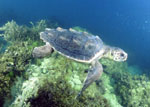 The decimation of the loggerhead turtle population (as well as the monk seals) has gotten perhaps the most attention in regard to tourist-related development that threatens wildlife in Greece, the sandy
beaches where these ancient sea creatures lay their eggs flooded with lights and loud amplified music from hotels,
driven on, punctured with beach umbrellas that destroy nests, etc.
The decimation of the loggerhead turtle population (as well as the monk seals) has gotten perhaps the most attention in regard to tourist-related development that threatens wildlife in Greece, the sandy
beaches where these ancient sea creatures lay their eggs flooded with lights and loud amplified music from hotels,
driven on, punctured with beach umbrellas that destroy nests, etc.
These beaches are, however, also habitat for other
creatures, including birds and flowering plants, and sand dunes as well, which have also been heavily affected by tourism.
Other coastal habitats include marshes, brackish lagoons, rocky areas, and sea cliffs. In recent years there has been a
trend towards more protection of some coastal habitats in 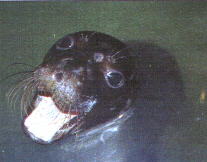 Greece, in part through funding and encouragement from the
European Union.
Greece, in part through funding and encouragement from the
European Union.
Another kind of habitat in Greece is the gorge, of which there are many in Greece. Though they are all different,
depending on the local topography and region, they all have the advantage of being land mostly off bounds to building and
grazing activity. In many of them specially adapted flowers and shrubs grow, as well as trees on places where the slopes
are not precipitous. Mixed forests often develop in gorges that do not develop where animals graze upon the most edible
plants, hence eliminating them. A good example of this is the Vikos gorge in Ipiros (Epiros) in the Pindos mountains. Many
birds also breed in gorges, such as 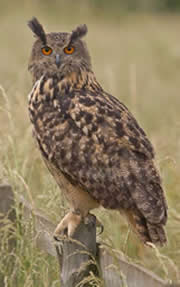 choughs, crag martins, eagles and eagle owls, griffon and Egyptians vultures, and
others. Mammals also find protection in large, wooded gorges.
choughs, crag martins, eagles and eagle owls, griffon and Egyptians vultures, and
others. Mammals also find protection in large, wooded gorges.
Olive groves of the older type, with old gnarled trees with many holes in them, and which still exist in Greece here and there, also provide habitat for nesting birds, and the ground below the trees with many flowers, including orchids.
Such ancient orchards can be found on the island of Lesvos/Mytilini, (which claims to have 11 million olive trees), on the large island of Evia, and in the Mani region of the Peloponisos (Peloponnese).
 Old stone walls in olive orchards also provide
habitat for birds, lizards, snails, geckos, etc. In places where herbicides are used, a very invasive yellow-flowered
oxalis (which resembles clover) can be seen blanketing the ground under olive trees. Resistant to the herbicide, it takes
over, where otherwise one would see a multitude of wildflowers.
Old stone walls in olive orchards also provide
habitat for birds, lizards, snails, geckos, etc. In places where herbicides are used, a very invasive yellow-flowered
oxalis (which resembles clover) can be seen blanketing the ground under olive trees. Resistant to the herbicide, it takes
over, where otherwise one would see a multitude of wildflowers.

Why not enjoy Harry's Free Musical Compositions while you read this site? (opens seperately)
©Harry's Greece Travel Guides